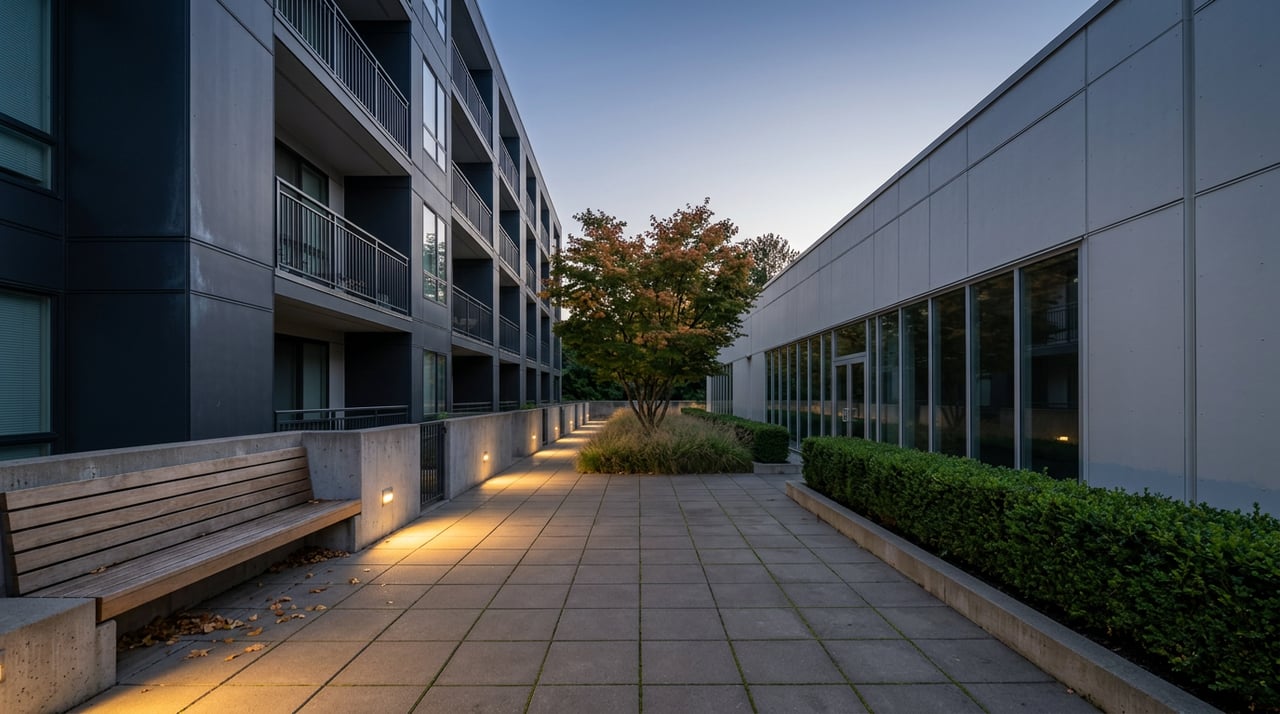
Charlestown Quietly Got a Second Town Square, and It Used to Make Milk
September 3, 2026
September 3, 2026
Ask a Charlestown resident where to send a visiting friend on a Saturday afternoon and you used to get one answer without hesitation: Main Street, maybe a stop at Monument Square, dinner at whichever tavern still had a table. Ask that same question today and the answer splits. Some people still say Main Street. A growing number say Hood Park.
That split is the story. Charlestown has not replaced its old center with a new one. It has built a second one, half a mile up Rutherford Avenue, on the site of a dairy plant, and the two now serve different purposes on different nights. Knowing which one you actually want has become part of living here.
Main Street still does what it has always done. Monument Restaurant & Tavern anchors the strip with the rotating craft beer and wood-fired pizza that made it the neighborhood's default answer to "where should we eat." Waverly Kitchen & Bar, a few blocks over on Bunker Hill Street, handles the daytime crowd with breakfast service seven days a week. Down toward the water, Pier 6 and Brewer's Fork round out the options for anyone who wants seafood or a pizza-and-wine night without leaving the historic core.
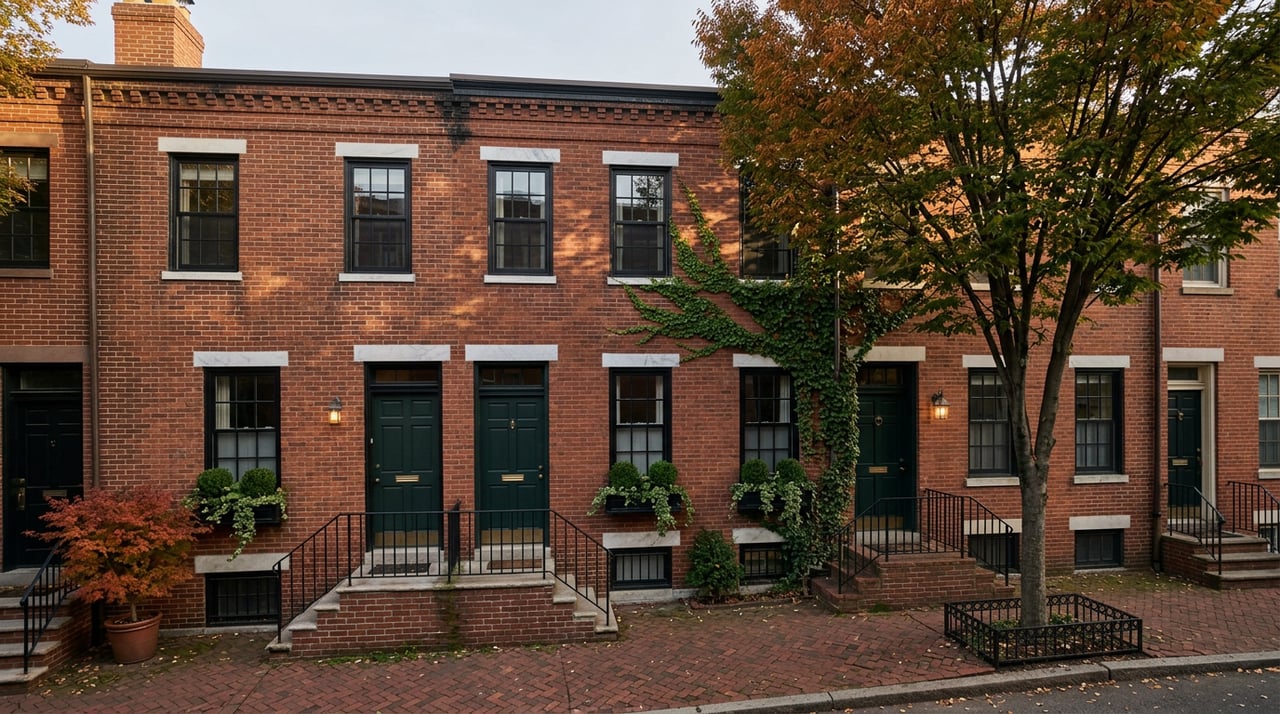
This is the Charlestown that shows up in every guidebook: brick rowhouses, the Bunker Hill Monument, the Freedom Trail spilling in from the North End. It is real, it works, and it is not going anywhere. But it is also not where the neighborhood's biggest gatherings happen anymore.
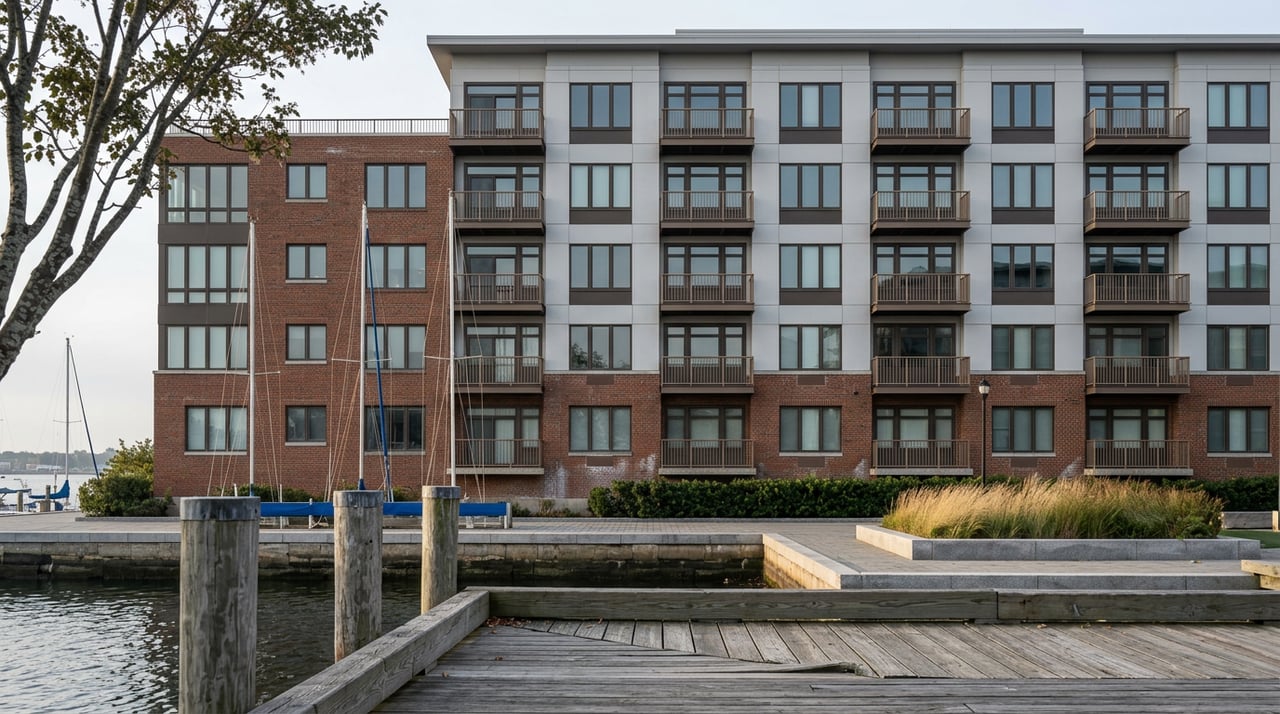
Hood Park sits on the former home of the H.P. Hood dairy company, the business that gave Boston its milk for over a century before the plant closed and sat waiting for a new use. What replaced it is a mixed-use campus designed by Elkus Manfredi Architects, recognized with a gold award from the International Design Awards in 2023, built around three existing office and lab buildings with five more planned.
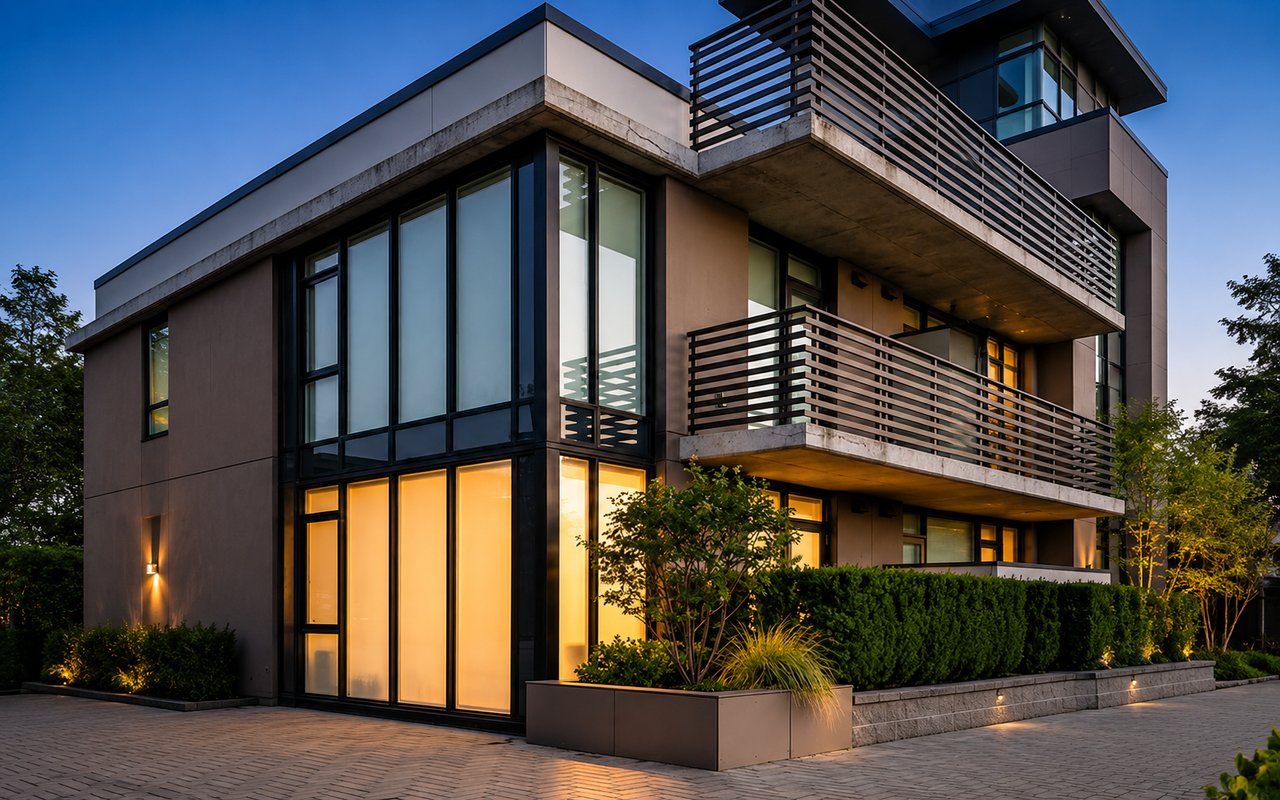
The residential piece is The Harvey, a 177-unit building designed by CBT Architects that brought 10,500 square feet of ground-floor retail to Rutherford Avenue when it opened. That retail space is what turned an office park into a neighborhood destination: Tradesman Coffee Shop & Lounge serves same-day roasted coffee by morning and becomes a full pizza bar by night, The Handle Bar runs indoor cycling classes, Element Salon and Spa handles hair and esthetics, and Boston Veterinary Clinic sits close enough that The Harvey markets itself as pet-friendly by default.
None of that alone would make Hood Park a gathering place. What did is the pair of venues built specifically for crowds.
The clearest way to see the shift is to put the two corridors side by side.
| Main Street corridor | Hood Park corridor | |
|---|---|---|
| Signature venue | Monument Restaurant & Tavern | The Anchor, 1 Shipyard Park |
| Format | Neighborhood tavern, seated dining | Rooftop wine and beer garden, waterfront views |
| Large-event space | None purpose-built | The Yard, 60,000 square feet, up to 5,000 guests |
| Established | Long-running neighborhood fixture | The Yard opened 2024; The Anchor and Harvey retail followed |
| What draws a crowd | Dinner, brunch, regular happy hour | Watch parties, salsa nights, Hood Park pop-up markets |
The Yard alone accounts for the gap. There is no equivalent capacity anywhere on the Main Street side of the neighborhood, and there was not meant to be. Main Street was built as rowhouses and storefronts a person could walk between in five minutes. Hood Park was built on industrial acreage that could absorb a stage, a bar, and a few thousand people without touching a residential block.
The numbers only matter if the crowds showed up, and this summer they did. The Anchor's rooftop pulled a full house for the Saturday World Cup double-header in early summer, the same weekend the Parade of Sails brought tall ships into the harbor, giving the venue a rare split-screen draw of soccer on the televisions and the actual waterfront visible over the railing. On slower nights, Saborcito turned the same space into a salsa and bachata floor, a different use of the identical square footage that Main Street's sit-down restaurants were never built to offer.
A few hundred yards over, Charlestown City Square kept its own rhythm going with Saturdays on the Square, the pop-up market and live sing-along series that ran weekly from May 2 through August 29 this year. That one belongs to neither corridor exclusively. It is Main Street's civic tradition, still drawing the crowd that wants folding chairs and local vendors over a rooftop bar, and it is proof the historic core has not been emptied out by what Hood Park built. It has just stopped being the only draw.
The Charlestown Farmers Market at Thompson Square, running Wednesday afternoons through late October, splits the difference again: old-corridor location, but the kind of weekly habit that Hood Park's retail mix is starting to compete for with its own coffee and pizza counter at Tradesman.
What this adds up to is a neighborhood that now has two distinct answers to "where's everyone going tonight," and the honest answer depends on what kind of night you want. A quiet dinner and a beer with a neighbor still means Main Street. A watch party or anything built for a crowd bigger than a dining room now means Hood Park.
Saturdays on the Square wrapped for the season on August 29. The farmers market at Thompson Square keeps running into late October, so Main Street holds its weekly draw a little longer than City Square's programmed events do. The Anchor's rooftop, being an outdoor beer garden, will thin out with the weather the way any waterfront patio does, shifting its heaviest nights back toward Main Street's indoor rooms once the temperature drops.
That seasonal handoff is worth knowing if you live here and plan your weekends around what's actually open. The two corridors do not compete so much as trade the lead depending on the calendar. Summer belongs to Hood Park's outdoor capacity. Fall and winter tilt back toward the tavern tables that have anchored Main Street for years.
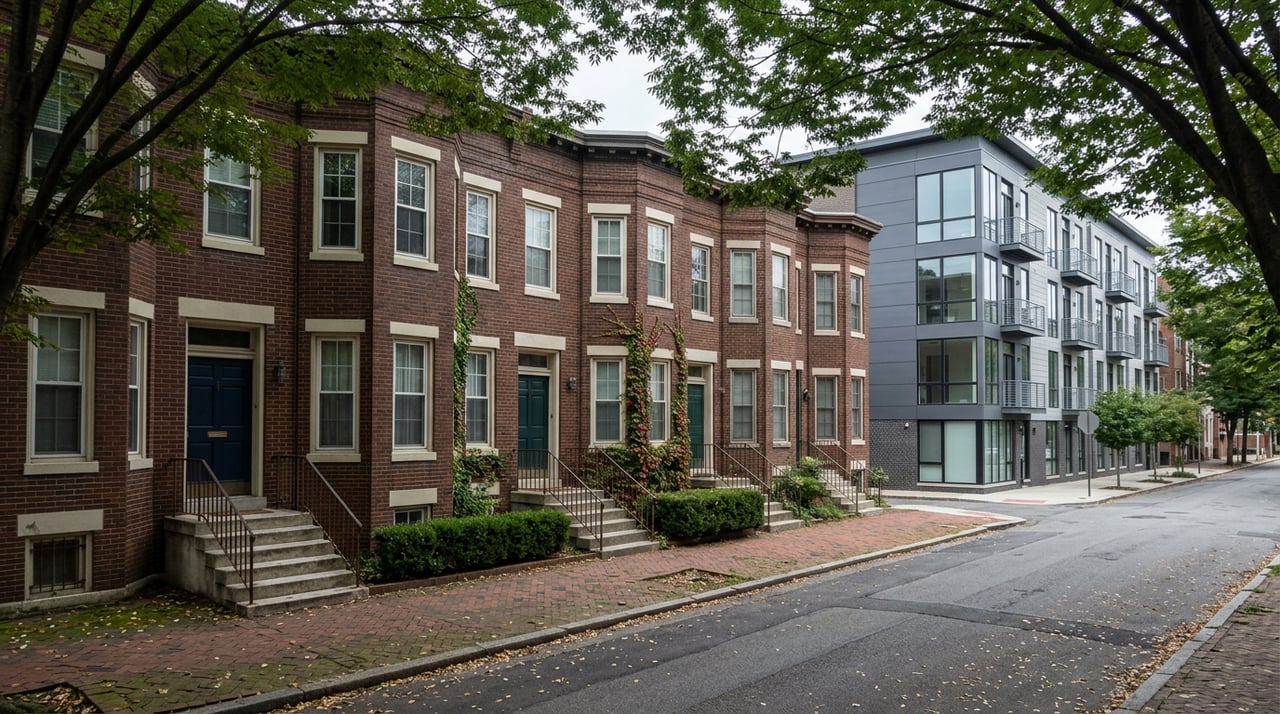
The bigger point is that Charlestown absorbed a second center without losing its first one, which is rarer than it sounds in a neighborhood this compact. Most of Boston's older neighborhoods either protect their historic core by keeping new development small, or they let a big project overshadow what came before it. Charlestown did neither. It let a former dairy site become a gathering ground for thousands while Monument Tavern kept its regulars and Thompson Square kept its Wednesday market. Both halves are doing what they were built for, at the same time, a few minutes apart.
If you're weighing which side of the neighborhood fits how you actually live, from the daily coffee run to the once-a-summer watch party, the Charlestown neighborhood guide from The Residential Group breaks down both corridors in more depth. And if the Navy Yard's condo stock has you thinking beyond just where to spend a Saturday, our team at The Residential Group knows this neighborhood block by block, not just corridor by corridor.
Stay up to date on the latest real estate trends.
The Residential Group at William Raveis Real Estate is a team of experienced agents, specializing in the sale of urban dwellings and new construction/renovation properties in Metropolitan Boston. They are consistently ranked among the top sales teams at William Raveis Real Estate and top teams in all of Massachusetts.
27 Boylston Street, Suite #310 Chestnut Hill, MA 02467