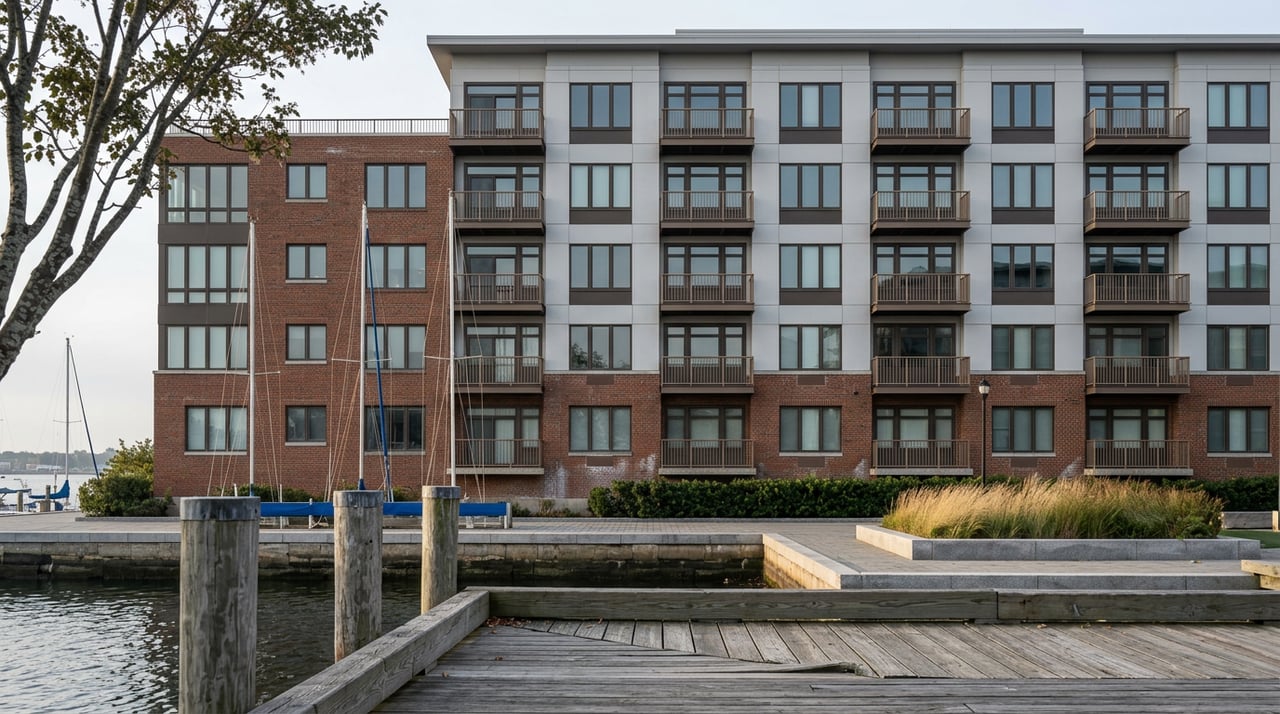
After Sail Boston, Fall Brings a Quieter Season to Boston’s Waterfront
September 17, 2026
September 17, 2026
According to NBC Boston, two of the tall ships that tied up along the Boston waterfront for Sail Boston's Sail250 celebration in July—the Dutch schooner Oosterschelde and Delaware's Kalmar Nyckel—docked right at Rowes Wharf, feet from the Boston Harbor Hotel's arch. For six days the wharf looked like a maritime festival poster: crowds three deep along the railing, ferries rerouted, the floating stage that normally hosts free summer concerts and movies pressed into service for something bigger.
That was the loud version of the neighborhood. It's gone now, and the quieter season has its own appeal. The Boston Harbor Islands ferry season doesn't end at Labor Day the way most people assume. It runs into October on a schedule that gets quieter, cheaper on foot traffic, and genuinely easier to use, right up until a specific date that can be easy to overlook.
Sail Boston spread its fleet across the harbor with a logic that said as much about the waterfront's geography as the ships themselves. The largest vessels in the fleet, Peru's BAP Union and Chile's Esmeralda, anchored the newly refurbished Commonwealth Pier. Three Class A ships, Germany's Gorch Fock, India's Sudarshini, and Portugal's Sagres, took the historic Boston Fish Pier. Charlestown alone hosted eighteen ships, including the U.S. Coast Guard's Eagle stationed behind the USS Constitution. Rowes Wharf, by contrast, hosted two, a modest footprint that kept the working plaza in front of the hotel from turning into a bottleneck.
For a wharf district that spends most of the year defined by ferries, water taxis, and the occasional harbor cruise, hosting two international tall ships for a week was an event, not a routine. Once the ships sailed on, Rowes Wharf's floating stage went dark for the season, and the neighborhood returned to its quieter fall rhythm.
What came next is the part worth paying attention to.
Most people who live along the harbor assume the ferries to Spectacle, Peddocks, and the rest of the Boston Harbor Islands National and State Park quietly stop running once summer ends. They don't. They shrink, on a schedule that's easy to miss unless you're checking it in September specifically.
| Route | Current Schedule | Last Day |
|---|---|---|
| Boston to Spectacle Island | Thursday–Sunday through September 27, then Friday–Sunday only | October 11 |
| Hingham to Peddocks Island | Thursday–Sunday | October 12 (Indigenous Peoples' Day, added as the final sailing) |
| Peddocks Island camping (tent sites and yurts) | Thursday–Saturday nights | October 12 |
That last line matters more than it looks. The 2026 camping season on Peddocks runs from June 17 straight through October 12, and while summer weekends required booking a tent site four months out, the fall stretch has noticeably more room to work with. Reservations open through ReserveAmerica, and the practical upshot for anyone who put off a harbor trip all summer is that late September and the first weekend of October remain opportunities to visit before the park closes for winter.
There's also a smaller, less publicized option: ferry service to Cathleen Stone Island, formerly known as Thompson Island, which has run on an unescorted public-access basis on select Saturdays through the season and is listed as Saturday-and-Sunday, schedule still to be confirmed, heading into fall. It departs from the EDIC dock in South Boston rather than Long Wharf, so it's a different island and a different operator, worth checking directly before planning around it.
Boston Harbor Now spent July and August running Spectacle Summer Nights, a Saturday series from July 18 through August 29 that turned the island into an after-hours destination with live music, a beer garden, food from ZaZ, and sunset views back at the skyline. That program has wrapped for the year. Fall programming includes guided birding walks across the harbor islands as migration ramps up.
The islands aren't an afterthought for this. The Boston Harbor Islands include colonial nesting grounds for double-crested cormorants, black-crowned night-herons, and snowy egrets that have used the park for at least two decades, plus seasonal appearances from species of special concern in Massachusetts, including common and least terns and the threatened northern harrier. Fall is when migratory shorebirds, raptors, and songbirds pass through in numbers that don't show up in July. The harbor isn't done being useful once the concerts stop. It's doing something quieter and, for those who enjoy a quieter pace, more interesting.
If you live at Rowes Wharf, Harbor Towers on East India Row, Battery Wharf, Lewis Wharf, Commercial Wharf, Burroughs Wharf, or the InterContinental, the ferry terminal isn't a destination. It's a five-to-ten-minute walk. Long Wharf, where the Spectacle Island ferry departs, sits at the center of the neighborhood, not the edge of it, which means the entire equation around island access changes once the tourist volume drops.
That's the part worth sitting with. All summer, getting a same-day ferry slot to Spectacle or a camping reservation on Peddocks could mean planning around high summer demand. By late September, fall schedules remain in effect for people checking their options. Restaurant tables along the Harborwalk open up. The benches at Christopher Columbus Waterfront Park offer quieter weekday-afternoon stops. The New England Aquarium, next door to Harbor Towers, settles back into its normal fall rhythm as the tourist traffic recedes.
None of this lasts. Once the Peddocks ferry makes its final run on Indigenous Peoples' Day and the camping season closes behind it, the harbor goes into its winter posture: closed islands, a quieter Harborwalk, and a wharf district that runs almost entirely on residents until spring reopens the ferry docks. From today, that's roughly three to four weeks left before the cutoff, and it isn't a consolation prize for missing summer. For waterfront residents, it's one of the best stretches of the year to use what's right outside the door before it locks up again.
If you're thinking about what year-round life on the Waterfront actually looks like, from the ferry schedule to the buildings that make up the wharf district, our Waterfront neighborhood guide breaks down the buildings, the amenities, and what changes season to season. And if you're ready to talk through what any of it means for your own plans on the harbor, The Residential Group is here to help you List With Confidence.
Stay up to date on the latest real estate trends.
The Residential Group at William Raveis Real Estate is a team of experienced agents, specializing in the sale of urban dwellings and new construction/renovation properties in Metropolitan Boston. They are consistently ranked among the top sales teams at William Raveis Real Estate and top teams in all of Massachusetts.
27 Boylston Street, Suite #310 Chestnut Hill, MA 02467