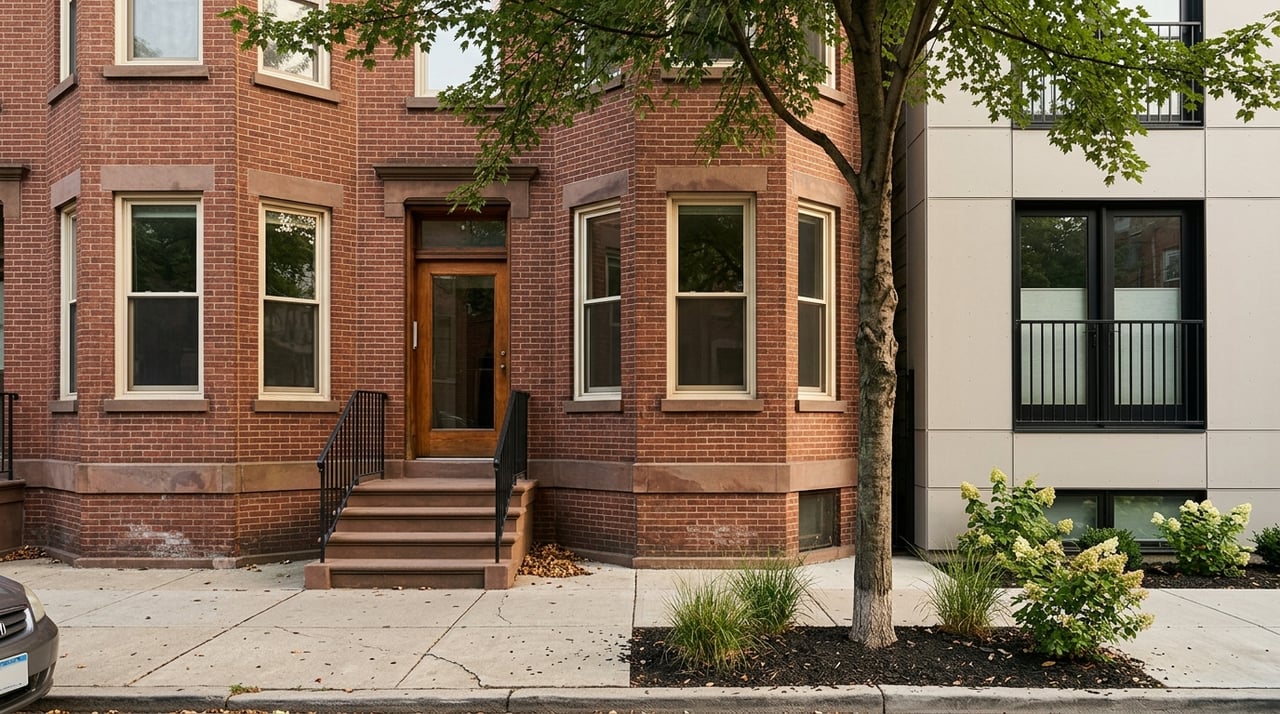
Somerville Green Line Extension: Impact On Condo Values
June 25, 2026
June 25, 2026
If you have been watching Somerville condo prices, you have probably wondered how much of the story comes back to the Green Line Extension. That is a smart question, because new transit does not affect every block, building, or price point the same way. In Somerville, the GLX has clearly added value, but the biggest gains are tied to walkability, retail access, and redevelopment momentum as much as the train itself. Let’s dive in.
The Green Line Extension added 4.7 miles of service from relocated Lechmere in East Cambridge to Union Square in Somerville and College Avenue in Medford. The Medford branch opened on December 12, 2022, and the GLX Community Path opened on June 10, 2023. That path now gives direct access to Magoun Square, Gilman Square, East Somerville, and Lechmere as part of a larger multi-use network.
That matters because Somerville has not treated GLX as just a train project. The city’s planning has long framed these station areas as walkable, mixed-use places with pedestrian-first streets, convenience retail, housing, and open space. In other words, the value story is about daily life as much as transit time.
Current market data shows Somerville condos listed around a median price of $865,000. Homes are typically spending about 28 days on market and receiving 2 offers. The city’s walk score of 89 also reinforces how much buyers value a neighborhood where errands, dining, and transit can work together.
The longer trend may be even more important. Somerville’s 2025 Housing Needs Assessment found that the city’s condo median sale price rose 33.1% between October 2019 and October 2024, reaching $850,000 in October 2024. Over that same period, single-family prices fell, which suggests condos have been the stronger part of the local housing market.
For buyers and sellers, that is a useful signal. It shows that demand for urban condo living in Somerville has stayed resilient, especially in areas where walkability and access continue to improve.
It is tempting to assume that any home near a station should rise at the same pace. Somerville does not work that way. The data points to a more layered market where micro-location, product type, and neighborhood identity still matter a lot.
Some neighborhoods were already premium before the extension opened. Others are still repricing as new development, public-realm upgrades, and retail activity continue to take shape. That means two condos with similar square footage can perform very differently depending on what surrounds them.
Somerville’s own planning helps explain why. The city’s station-area framework emphasizes complete neighborhoods and street life, not just rail access. That is why a station next to active retail, better sidewalks, and public space can support more durable value than a station area that still feels transitional.
Davis Square remains the clearest premium node in the GLX-adjacent market. Recent data shows a median sale price of $1.15 million, about 16 days on market, and a 98.3% sale-to-list ratio. It is the most established example of how transit, walkability, and a mature neighborhood identity can support higher condo pricing.
For buyers, Davis Square often represents the established-premium option. You may pay more upfront, but you are buying into one of the most proven condo submarkets in Somerville.
Ball Square posted a median sale price of $1.35 million in the latest sample. That said, only 3 homes sold in that snapshot, so it is important to read that figure carefully. With so few transactions, short-term pricing can look more dramatic than the broader trend really is.
Still, Ball Square fits the profile of a location where station-area infill and improved access can support strong values. It is best viewed as a small-sample market with meaningful upside, but less consistency in the data than Davis Square.
East Somerville sits at a lower price point, with a recent median sale price of $934,686 and about 29 days on market. The city’s Housing Needs Assessment specifically notes stronger condo-conversion activity there. That makes East Somerville one of the clearest examples of a neighborhood where buyers, owners, and investors are all reacting to the same redevelopment story.
For buyers, East Somerville can offer a lower absolute entry point than the most established premium areas. For owners of two- and three-family properties, it is also a neighborhood worth watching closely because conversion activity can affect both inventory and future pricing.
Magoun Square is around $849,714 in median sale price, and the area has seen a 31.1% year-over-year rise in price per square foot to $822. That is an important data point because it suggests buyers may be placing a growing premium on location efficiency and future potential, even when headline sale prices are still mixed.
Planning for Magoun Square also focuses heavily on foot traffic, bike access, retail convenience, and pedestrian connections. That aligns closely with the broader GLX thesis: the strongest value gains tend to appear where mobility and neighborhood usability overlap.
One of the clearest ways to understand future condo pricing is to watch where development and permits are clustering. Somerville’s 2025 Housing Needs Assessment says permit data from 2019 through October 2024 shows increasing residential development interest since 2020, especially in multifamily housing. During that stretch, the city permitted 2,051 net new units, and 2,018 of them were multifamily.
Those permits are not evenly spread across the city. The biggest clusters are around Magoun Square, Spring Hill, Union Square, Boynton Yards, and East Somerville. That pattern supports the idea that GLX has reinforced demand in areas where redevelopment and transportation upgrades are happening at the same time.
Union Square and Boynton Yards remain the largest mixed-use development zones tied to the GLX story. Somerville’s Urban Revitalization Plan for Union Square covers 117 acres and seven development blocks, with a long-running focus on office space, retail, community space, housing, green space, and transit-oriented streets. Boynton Yards has an approved master plan that can guide up to 1.4 million square feet of mixed-use development on South Street, along with major infrastructure improvements and community benefits.
For condo values, this creates both opportunity and nuance. Large projects can raise a neighborhood’s long-term appeal, but they can also introduce new inventory that temporarily moderates pricing while the market absorbs additional units.
If you are buying a condo in Somerville, the key question is not simply whether a property is near GLX. The better question is what kind of GLX-adjacent neighborhood you want to buy into.
You may prefer an established premium area like Davis Square, where pricing is higher but the market is more mature. Or you may lean toward East Somerville or Magoun Square, where absolute prices can be lower and future neighborhood change may create more upside over time.
A smart buying approach is to compare:
That last point matters more than many buyers realize. A neighborhood with active development can become more appealing over time, but it may also see more competition from newly delivered units.
If you already own a condo or a small multifamily property in Somerville, GLX has likely strengthened your location story. But value growth will still depend on your exact submarket, your building type, and how the surrounding area evolves.
For condo owners, the biggest value drivers to watch are neighborhood-level pricing, new retail openings, and the pace of public-realm improvements. For owners of two- and three-family properties, condo-conversion filings and station-area redevelopment may be especially important.
The city’s Housing Needs Assessment notes that condo-conversion applications rose notably between fiscal year 2020 and fiscal year 2022, with East Somerville standing out in particular. The same report says condo sales have remained strong at roughly 30 to 40 units per month. That makes conversion, hold, or redevelopment decisions more strategic than ever for the right property.
The Green Line Extension has helped strengthen Somerville’s condo market, but not in a one-size-fits-all way. The strongest pricing support appears in places where transit access is paired with walkability, retail, and visible neighborhood investment. That is why Somerville’s condo market feels closer to Cambridge on pricing than to Medford, even while individual neighborhoods continue to move at different speeds.
If you are trying to understand where values may hold strongest or where upside may still exist, the best lens is not just proximity to the tracks. It is how well a location combines transit, street life, redevelopment momentum, and day-to-day convenience.
In a market this local, broad headlines only get you so far. If you want help evaluating a Somerville condo, a small multifamily property, or a possible condo-conversion opportunity near the GLX, connect with The Residential Group for neighborhood-level guidance grounded in how this market actually moves.
Stay up to date on the latest real estate trends.
The Residential Group at William Raveis Real Estate is a team of experienced agents, specializing in the sale of urban dwellings and new construction/renovation properties in Metropolitan Boston. They are consistently ranked among the top sales teams at William Raveis Real Estate and top teams in all of Massachusetts.

27 Boylston Street, Suite #310 Chestnut Hill, MA 02467