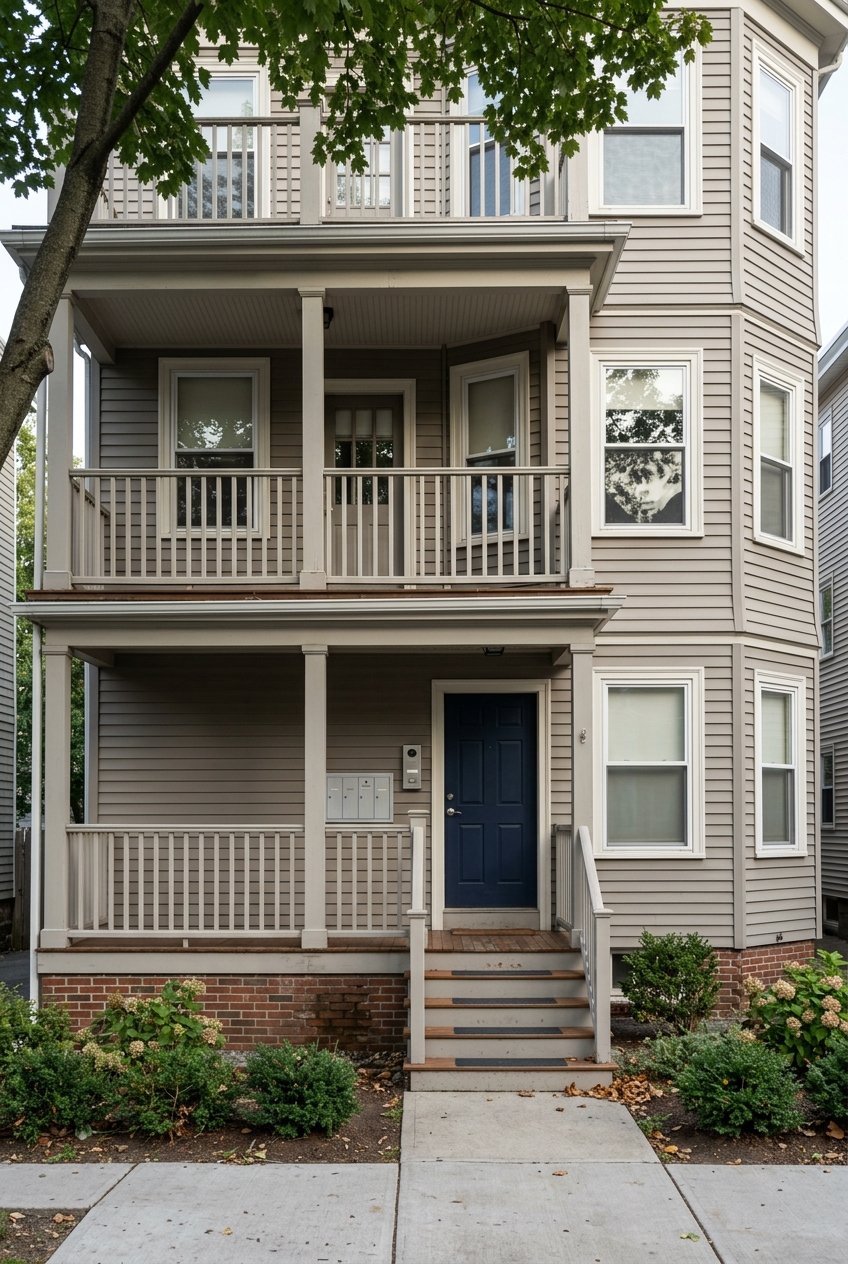
Dorchester House Hacking Guide for Two- and Three-Families
July 2, 2026
July 2, 2026
Wondering if a Dorchester two-family or triple-decker could help you buy a home and offset your monthly costs at the same time? You are not alone. For many Boston-area buyers, house hacking sounds smart in theory, but the real question is whether the numbers, layout, and rules actually work in Dorchester. This guide will show you what to look for, what to avoid, and how to think about a two- or three-family purchase with more confidence. Let’s dive in.
Dorchester is one of the Boston neighborhoods where small multifamily ownership feels especially natural. Boston’s housing stock has a long history of two-family homes and triple-deckers, and neighborhoods farther from downtown, including Dorchester, have a large supply of one-, two-, and three-family properties.
That matters because house hacking works best where the housing pattern already supports it. Boston Planning notes that nearly 40% of the city’s housing stock is in 2-4 unit structures. A 2025 Dorchester analysis adds that triple-deckers, condos, and two-family homes make up roughly 63% of Dorchester’s housing units.
If you picture Dorchester house hacking, you are probably picturing a triple-decker. These three-story, stacked wood-frame buildings became common in Boston from the 1880s through the 1930s and remain a hallmark of the city’s small-property housing stock.
Historically, many were owner-occupied, with the other units rented out, sometimes to relatives. That older pattern still offers a useful model today. You live in one unit, rent the others, and treat the property as both your home and a small rental business.
A two-family often appeals to buyers who want rental help without quite as much complexity. With fewer units, you usually have fewer tenants, fewer turnovers, and fewer moving parts to manage.
In practical terms, that can make a two-family easier to live with if this is your first time owning income property. You still get rental support, but the day-to-day experience may feel more manageable than a full three-family setup.
A legal, well-maintained three-family can be the strongest pure house-hack option. If the layouts rent cleanly and the property is set up properly, the extra unit may give you more income support and more flexibility over time.
Dorchester zoning includes 3F and 3F-D subdistricts, and 3F-D areas are designed to accommodate triple-deckers as of right. That does not mean every building is automatically a great buy, but it does reinforce how established the three-family pattern is in this part of Boston.
One of the most important questions is simple: is the property truly a legal two-family or three-family? In Dorchester, that question matters a lot because zoning is designed to preserve existing two-family and three-family patterns, not encourage improvised extra units.
A straightforward, legal layout is usually the cleanest long-term fit. If the unit count depends on a basement or attic setup that may not be legal, your financing, rental plan, and future resale picture can all get more complicated.
This is one area where buyers should slow down. Dorchester zoning says basement dwelling units are forbidden in the Dorchester Neighborhood District.
That means a business plan built around “adding one more rental unit downstairs” may not hold up. If the deal only works because of a basement apartment assumption, it is probably time to rework the numbers.
A strong house hack is not just about maximizing rent. It is also about making sure your unit works well as your actual home.
In many cases, the best setup is the one where your unit has better light, better privacy, or the most flexible bedroom count. Boston’s housing mix suggests renter demand often leans toward one- and two-bedroom units, while owner units are more often two or three bedrooms, so a practical setup often includes a comfortable owner space and easy-to-rent companion units.
Boston rental units tend to skew smaller. Across the city’s rental stock, 30% of rental units have one bedroom and 35% have two bedrooms.
That gives you a useful lens for Dorchester. A house hack often works best when the non-owner units fit the part of the market that is easiest to lease, especially one- and two-bedroom apartments, while your own unit offers enough space for long-term comfort.
Current asking-rent data also helps frame expectations, even if it should not be treated like formal rent comps. As of June 28, 2026, Zumper showed a Dorchester median rent of $2,957 per month, with average asking rents around $2,514 for one-bedroom units, $2,800 for two-bedroom units, $3,150 for three-bedroom units, and $3,500 for four-bedroom units. Zumper also notes that some bedroom and property-type categories have limited data, so it is best to use these figures as directional signals, not guarantees.
Most workable house hacks start with the same foundation: you plan to live in the building as your primary residence. That is not just a lifestyle choice. It is also central to how several common financing paths work.
HUD says FHA loans can be used on one- to four-unit owner-occupied properties and may require as little as 3.5% down. That can make a two- or three-family purchase more realistic for a first-time buyer who wants to enter the market through a multifamily property.
Conventional lending may also allow you to use rent from the units you do not occupy in a two- to four-unit primary residence, subject to lender documentation and underwriting rules. Fannie Mae and Freddie Mac both allow eligible rental income from units not occupied by the borrower in this kind of primary-residence setup.
The key takeaway is that projected rent can support your qualification, but it should not be the only reason the deal works. In a strong purchase, the rental income helps the property make sense rather than rescuing a budget that is already stretched.
For Massachusetts buyers, MassHousing is especially worth knowing. It allows purchases of single-family homes, condos, and 2-4 family properties when the buyer will use the property as a primary residence.
Its current homebuyer information says down payment assistance can be as high as $30,000. MassHousing also states that eligible borrowers must owner-occupy, cannot own other real property at closing, and must complete landlord counseling for 2- to 4-family purchases.
Dorchester’s small multifamily stock includes many older buildings, and older buildings come with real maintenance and compliance demands. Boston reports that 50% of the city’s housing stock was built before 1940, and 60% of owner-occupied units were built before 1940.
That age is part of the charm, especially in classic triple-deckers. It also means you should expect to pay close attention to systems, safety items, and ongoing upkeep.
If you will be renting units, Boston requires landlords to register rental property every year by July 1. The city also says registered rental property will be inspected at least once every five years.
All rental properties must meet the city’s housing code. That includes basics like functioning smoke and carbon monoxide detectors, heat, water, adequate exits, and pest-free conditions.
Lead paint is another major issue in older housing. Massachusetts says lead hazards must be removed or controlled in dwelling units where a child under 6 resides, and the state requires compliance documentation in pre-1978 units when a child under six lives there.
That does not mean every older Dorchester property is a bad fit. It means you should approach pre-1978 buildings with clear eyes, careful due diligence, and a realistic maintenance budget.
Before you make an offer on a Dorchester two-family or three-family, make sure you can answer a few practical questions clearly.
If you cannot answer these questions confidently, it may be worth stepping back before moving forward. In Dorchester, the strongest house hacks are usually the simple ones: legal unit count, practical floor plan, realistic rents, and enough margin to handle an older Boston building responsibly.
A good Dorchester house hack is rarely about chasing the most aggressive possible income story. More often, it is about buying a legal two- or three-family, choosing an owner unit you will actually enjoy living in, and making sure the other units fit the local rental market.
Classic triple-deckers can be especially compelling because they match Dorchester’s historic housing pattern so well. Two-families can also be excellent choices if you want a simpler ownership experience with fewer moving parts.
If you are considering a Dorchester multifamily purchase, the right guidance can make a big difference. The team at The Residential Group can help you evaluate layout, zoning context, and the market realities behind a two- or three-family opportunity.
Stay up to date on the latest real estate trends.
The Residential Group at William Raveis Real Estate is a team of experienced agents, specializing in the sale of urban dwellings and new construction/renovation properties in Metropolitan Boston. They are consistently ranked among the top sales teams at William Raveis Real Estate and top teams in all of Massachusetts.
27 Boylston Street, Suite #310 Chestnut Hill, MA 02467