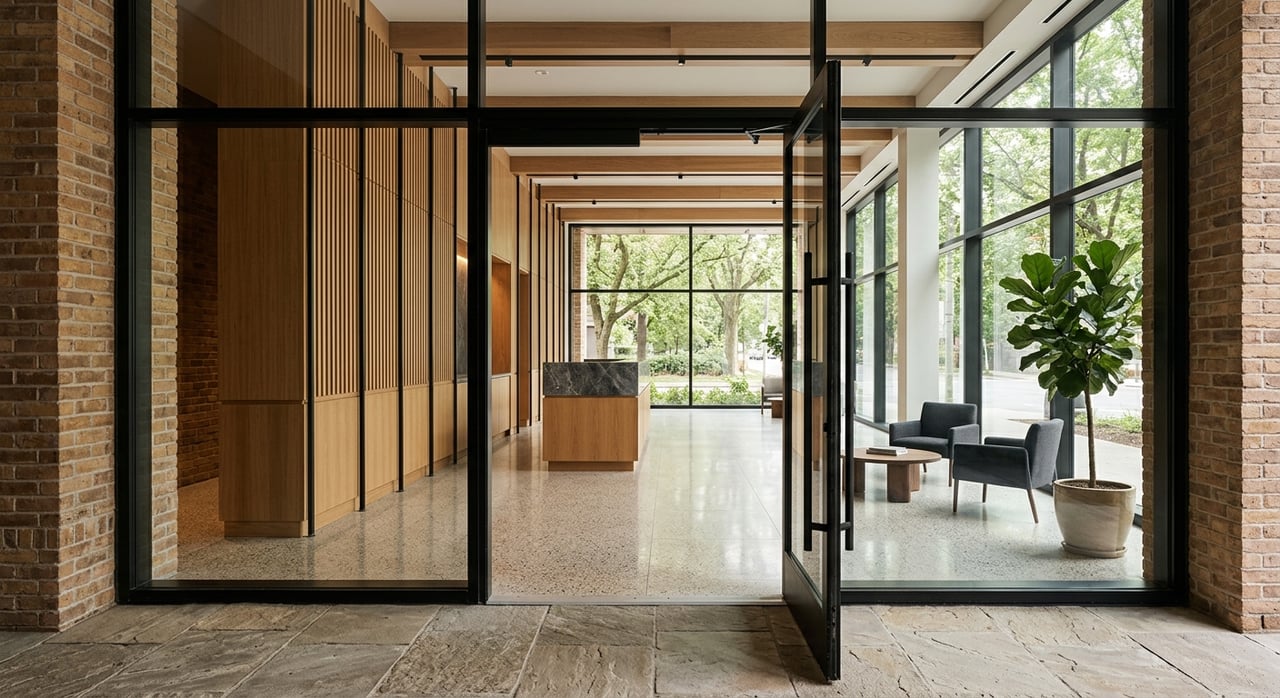
Fenway Condos For Medical And Grad Professionals
July 16, 2026
July 16, 2026
If your days revolve around labs, rounds, research, or graduate seminars, where you live can shape your entire week. In Boston, Fenway stands out because it puts you close to Longwood Medical Area while also surrounding you with transit, parks, and everyday city convenience. If you are weighing whether a Fenway condo fits your routine, budget, and space needs, this guide will help you understand the tradeoffs and the opportunities. Let’s dive in.
Fenway works especially well for people who want to live near Longwood without giving up the energy of city life. Boston Planning describes Fenway as a neighborhood tied closely to nearby academic and medical institutions, and that shows up clearly in the local population.
The city’s 2025 Fenway profile says 61% of residents are enrolled in college or university. Nearby Longwood is even more concentrated, with 93% of its population enrolled and 67.9% of payroll jobs in healthcare and social assistance. That combination helps explain why Fenway feels so aligned with the schedules and priorities of graduate students, researchers, residents, fellows, and hospital staff.
When your work or class schedule starts early and ends late, commute time matters. Fenway sits beside Longwood Medical Area, which Boston Planning describes as a dense medical and academic center between Brookline and Mission Hill.
That proximity is one of Fenway’s biggest strengths. Instead of organizing your day around a long trip across the city, you can focus on finding a home that supports a simpler routine with faster access to campus, clinic, or lab.
Day to day, Fenway feels like a bridge between campus, clinic, and city life. The neighborhood includes a dense mix of hospitals, colleges, cultural institutions, and parks, which gives it a distinctly practical rhythm for people with demanding schedules.
That does not mean every block feels the same. It does mean the neighborhood is shaped by people who value convenience, mobility, and access to work and study spaces.
For many buyers, the biggest question is simple: how easy is the commute? In Fenway, the answer is one of the clearest reasons to consider the neighborhood.
Longwood Collective’s shuttle system is a major advantage for eligible employees and students with qualifying IDs. The system offers free last-mile connections, serves 14 stops, and reports that most riders are only a 1-to-4 minute walk from their workplace or school.
Current shuttle materials show connections between Longwood Medical Area and Fenway, Brookline, Ruggles, JFK/UMass, and Harvard Square-related destinations. For someone balancing a packed weekly schedule, that kind of connection can make daily life feel much easier.
Transit access goes beyond the shuttle. Longwood Collective notes that the Green Line D Branch serves Brookline, Newton, and downtown Boston, with LMA stops at Longwood and Fenway, while the E Branch serves the MFA, Longwood Medical Area, and Brigham Circle.
Harvard Medical Campus Planning also lists key bus routes to Longwood Medical Area, including the 8, 39, 47, 60, 65, 66, CT2, and CT3. Commuter rail access through Ruggles and Lansdowne adds another layer of flexibility depending on where else you travel during the week.
For many medical and graduate professionals, going car-light or car-free is part of the appeal. Fenway is one of the Boston neighborhoods where that choice is often realistic.
Boston’s 2025 housing data show that 62.0% of Fenway households have no vehicle available. That does not mean a car never makes sense, but it does suggest the neighborhood is already structured around transit, walking, biking, and shuttle use rather than daily driving.
Fenway is also getting better connected for people on foot and on bikes. The city says the Fenway Path is a planned off-road route from the Muddy River path in the Emerald Necklace to Lansdowne Station, with its first two sections opened in 2022 and 2023.
The path is intended to connect residents to jobs, businesses, transit stations, cultural institutions, and parks. The city also says the Audubon Circle reconstruction added separated bike lanes and created a high-comfort bike route between Kenmore Square and the Brookline town line.
If you are shopping for a condo in Fenway, it helps to set expectations early. This is a neighborhood where compact housing is a major part of the market.
Boston’s 2025 data show that 65.0% of occupied units in Fenway are studios or one-bedrooms. The same data also show that the neighborhood is heavily rental-oriented, with 84.8% renter occupancy and 8.7% owner occupancy.
For buyers who value efficiency over square footage, Fenway can make a lot of sense. Smaller homes often line up well with the needs of people who spend long hours at work or school and would rather prioritize location and commute time over extra rooms.
Current city-backed development patterns reinforce that compact format. For example, 112 Queensberry Street is a six-story rental project with 11 studios, 13 one-bedrooms, no car parking, and 24 bike spaces.
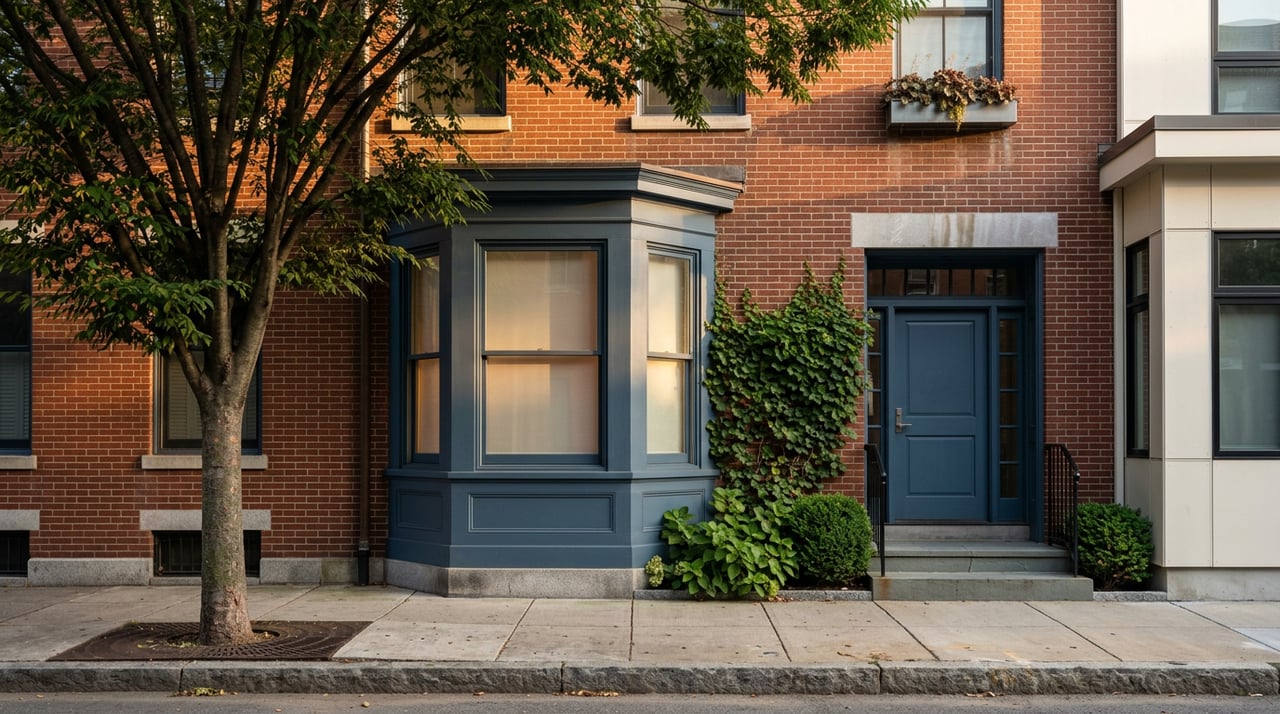
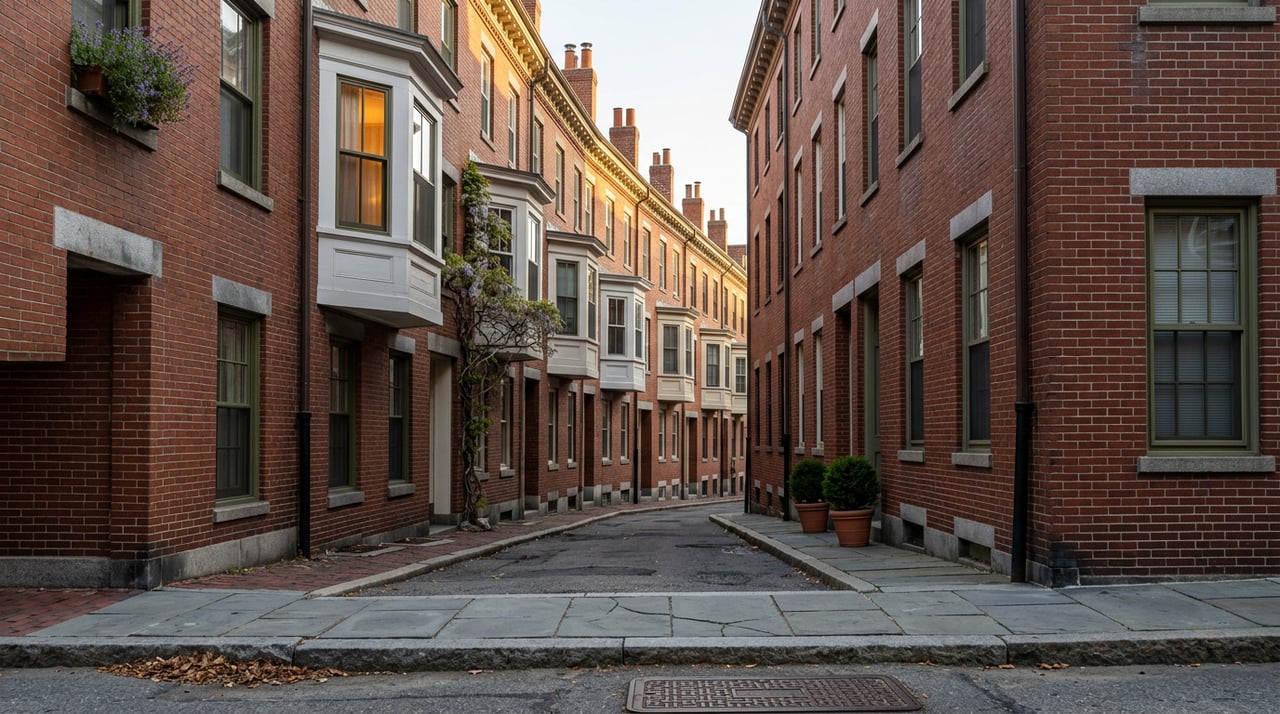
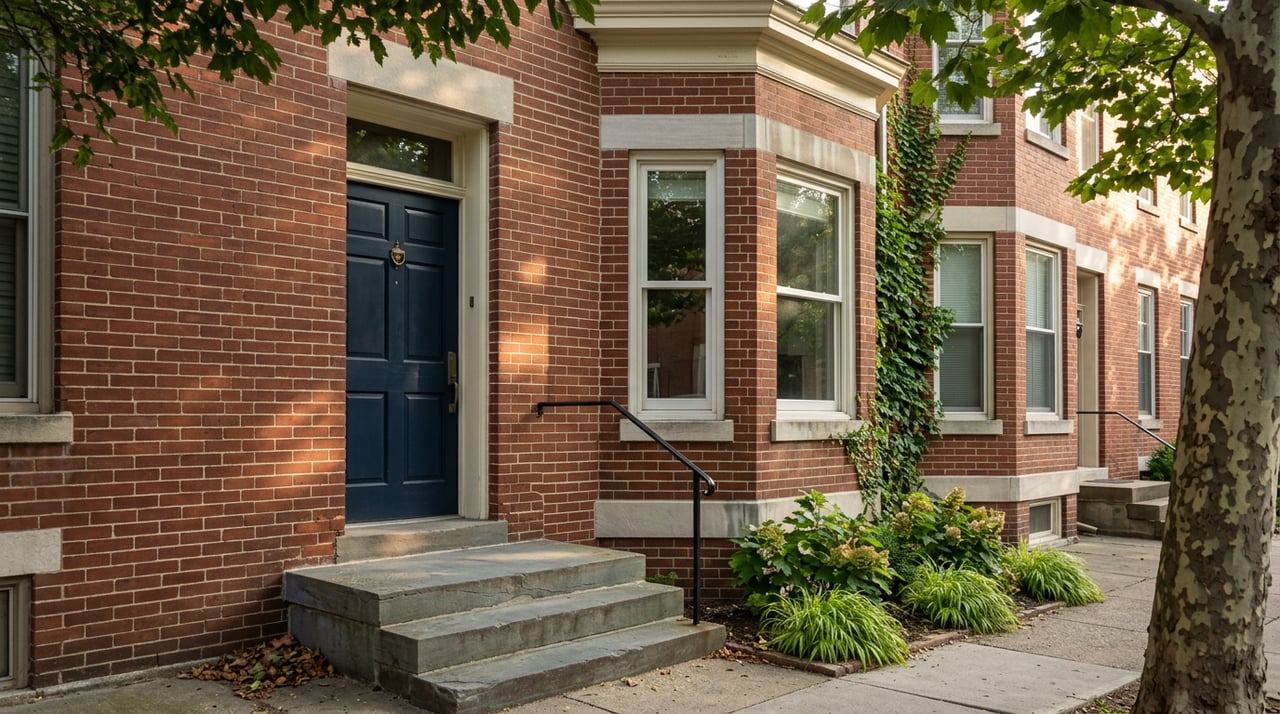
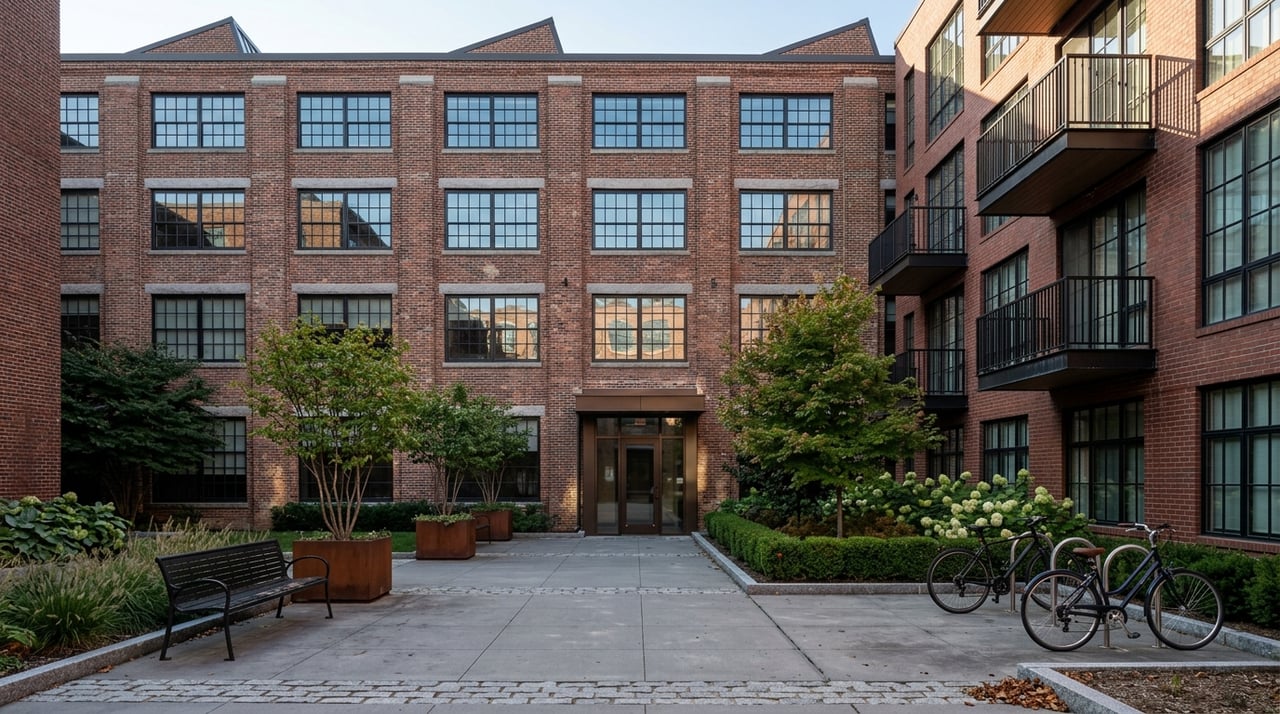
Fenway is not only glassy new construction. Boston Planning highlights the neighborhood’s stately brick row houses alongside newer towers, which is important if you want a more classic Boston feel.
That older housing texture is especially relevant around the neighborhood core, near the Charles River, and along streets tied to the Emerald Necklace. For condo buyers, that means Fenway can offer both traditional building character and newer product, depending on your priorities.
If you prefer newer finishes, polished common areas, and a more modern feel, Fenway also has that side of the market. Boston Planning points to newer apartment and condominium towers near Fenway Park as the modern end of the neighborhood.
These buildings can appeal to buyers who want new construction and a highly convenient location close to Longwood, transit, dining, and cultural destinations. The tradeoff is that newer product may feel less intimate than smaller brick buildings and may not deliver the same classic architectural texture.
Fenway is strong, but it is not the only option for Longwood-area buyers. A smart search usually includes comparison shopping across a few nearby neighborhoods with different strengths.
Compared with the South End, Fenway is generally the more campus- and medical-oriented choice. The South End is described by Boston Planning as a Victorian townhouse neighborhood with a strong restaurant and arts identity.
The housing mix also differs. In 2025 data, the South End has a lower share of studios and one-bedrooms than Fenway, 47.3% versus 65.0%, and a much higher owner-occupied share, 38.8% versus 8.7%.
For you, that may come down to priorities. If you want the shortest commute and a housing stock that leans compact, Fenway may fit better. If you want more brownstone character and a more established ownership market, the South End may deserve a closer look.
Brookline is often the quieter, more residential alternative in the Longwood orbit. Longwood transit materials show that the D Branch serves Brookline directly and that Longwood buses also run via Brookline Village, so the area remains highly workable for Longwood commuters.
In practical terms, Fenway tends to feel more immediate for a walk-to-work lifestyle, while Brookline can appeal if you want a more residential setting and still need dependable access to Longwood. Your best fit depends on how you balance commute speed, housing style, and day-to-day atmosphere.
Fenway tends to work best when your home search is centered on efficiency. If your ideal setup includes quick access to Longwood, strong transit, and a home that keeps city living simple, the neighborhood deserves serious attention.
It can be a strong fit if you are:
Fenway offers a strong live-near-work case, but the right purchase still depends on your own routine. Before narrowing your search, it helps to weigh a few practical questions.
Ask yourself:
For many buyers in medicine and graduate programs, Fenway’s biggest advantage is alignment. The neighborhood’s transit-first structure, compact housing stock, and direct relationship to Longwood match the realities of busy urban schedules unusually well.
If you are exploring condos in Fenway or comparing nearby Boston neighborhoods, The Residential Group can help you evaluate the options with clear, local guidance.
Stay up to date on the latest real estate trends.
The Residential Group at William Raveis Real Estate is a team of experienced agents, specializing in the sale of urban dwellings and new construction/renovation properties in Metropolitan Boston. They are consistently ranked among the top sales teams at William Raveis Real Estate and top teams in all of Massachusetts.